

Broadcast
As New Zealanders’ viewing habits evolve, broadcast remains an important part of the media mix. Rather than being replaced by digital, television and radio continue to provide the reach, resilience and free access audiences value, while streaming adds greater choice and flexibility. Together, these platforms are shaping a more diverse and resilient future for media in New Zealand.
 For years, the evolution of media seemed clear. Audiences were moving online, streaming was growing and traditional television and radio were expected to steadily decline.
But the reality is proving more nuanced. Rather than one replacing the other, broadcast and digital are increasingly coexisting.
Kordia recently renewed our long-standing partnerships with TVNZ, RNZ and NZME, reaffirming the continuing importance of New Zealand’s nationwide broadcast infrastructure and the role it plays in connecting communities with trusted news, entertainment and information.
Broadcast remains relevant
Released last month, NZ On Air’s latest audience research provides an interesting picture of how viewing habits are evolving.
Linear television’s daily reach increased from 47% of New Zealanders in 2024 to 51% in 2026. Over the same period, subscription video-on-demand fell from 56% to 50%.
When linear television is combined with local broadcaster video-on-demand services such as TVNZ+, television reaches 63% of New Zealanders each day - slightly ahead of the 62% reached by global video platforms.
The findings reinforce the continuing role of broadcast within New Zealand’s media mix.
Free access matters
Affordability is an important consideration for New Zealand households, with many consumers becoming more selective about the number of subscriptions they have. Free-to-air television and radio require no monthly subscription, mobile data or high-speed broadband connection.
For a geographically dispersed country, ensuring people can access trusted information regardless of their location, connectivity or ability to pay remains important.
This becomes particularly significant during major events and emergencies, when large numbers of people need the same critical information at the same time.
Resilience through diversity
Kordia’s Digital Terrestrial Television (DTT) and FM networks are designed to deliver content simultaneously to large audiences. Unlike internet-based delivery, additional viewers or listeners do not place additional demand on the distribution network.
Broadcast also operates independently of an individual household’s broadband or mobile connection - an important distinction during emergencies.
New Zealand is exposed to natural disasters that can disrupt electricity and telecommunications infrastructure. At these times, having multiple ways to communicate with communities - to keep them informed and safe - is critical.
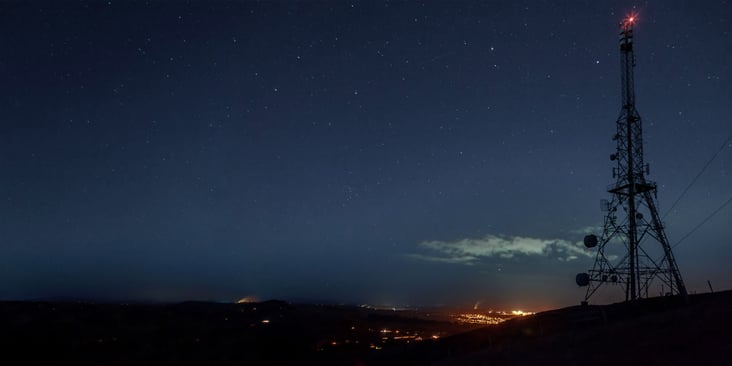
Kordia’s broadcast infrastructure has been built and strengthened over decades to operate in some of New Zealand’s most challenging environments. Our transmission sites are primarily located overlooking cities and towns, and are supported and monitored around the clock.
No communications platform is immune to disruption, which is why maintaining a diverse technology mix reduces the risk of a single point of failure.
It isn't broadcast versus digital
The enduring nature of broadcast does not diminish the importance of streaming. Digital consumption will continue to evolve, and broadcasters are responding to audience preferences.
The question is not a case of broadcast or digital, but how they can work together to give audiences greater choice. Broadcast provides reach, scale, reliability and free access while digital provides flexibility and personalisation.
Change and investment need to be guided by evidence about how New Zealanders are consuming content, rather than assumptions about how quickly behaviour will change.
Helping broadcasters navigate what comes next
Kordia’s role is changing alongside the industry.
For decades, we have operated and maintained the nation's critical communications and broadcast infrastructure. Today, we are combining that experience with capabilities that help broadcasters and content providers distribute and manage content across broadcast and digital platforms.
Through our managed media solutions and partnerships with organisations including Arqiva, we are helping customers extend their reach, improve operational efficiency, reduce complexity and adapt to changing audience preferences.
This way, New Zealanders will have greater choice while retaining the reach, affordability and resilience that have made broadcast an important part of our communications landscape for generations to come.